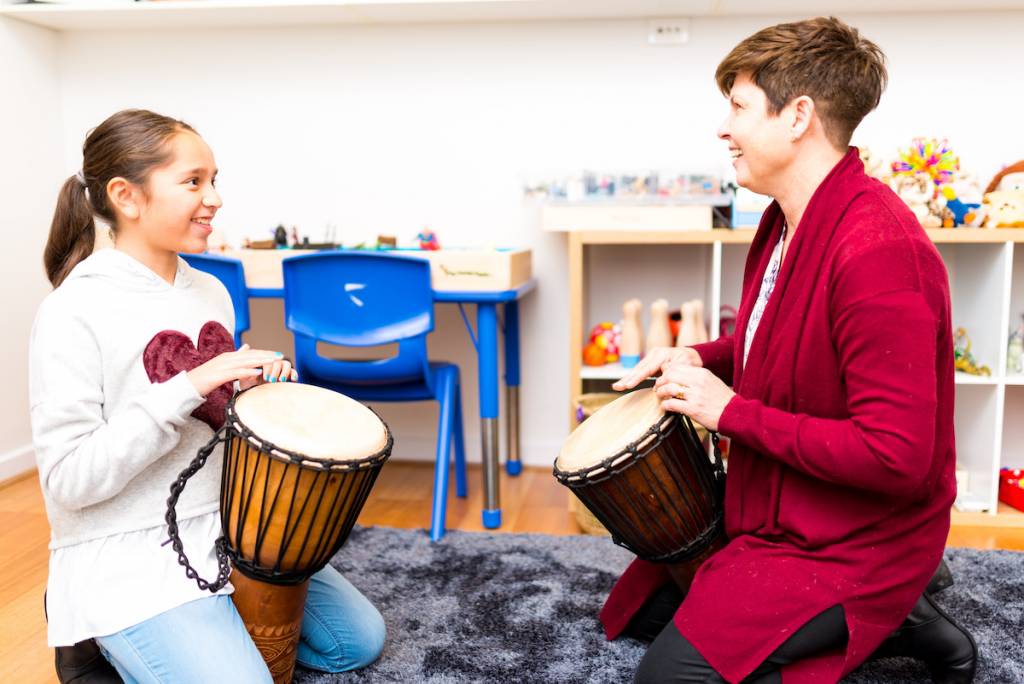
Understanding Developmental Age, Stage, and Child-Centred Play Therapy
When working with children, it’s essential to look beyond chronological age and consider developmental age and stage. Children grow at different rates, and their emotional, social, and play skills don’t always match their actual age in years. This is where child-centred approaches, such as Child-Centred Play Therapy (CCPT) can be supportive.
What Do We Mean by Developmental Age and Stage?
Developmental age refers to where a child is functioning across areas like emotional regulation, social interaction, communication, and play skills. Developmental stage reflects the typical behaviours and abilities expected at that level.
For example, a 7-year-old may:
- Play cooperatively and follow rules (expected for age), or
- Prefer parallel play or struggle with turn-taking (more typical of a younger developmental stage)
Neither is “wrong”—but understanding the difference helps guide support.
Expected Play Behaviours Across Development
Play is a child’s natural language, and it evolves in gradual, predictable ways, linked to a child’s cognitive, social, and emotional growth. In the early years, typically between ages two and four, children tend to engage in sensory and exploratory play. This might include activities like manipulating objects, experimenting with textures, or engaging in simple pretend scenarios. At this stage, children often play alongside others rather than directly with them, a pattern known as parallel play. While it may look less interactive, it is an important foundation for later social development.
As children move into the preschool years, around ages four to five, their play becomes more imaginative and socially engaged. They begin to create stories, take on roles, and involve others in their play. Cooperative play starts to emerge, although it may still be inconsistent, and children are learning how to share ideas, negotiate roles, and manage simple conflicts. Their growing language skills support more complex storytelling and collaborative interactions.
By the early school years, roughly ages six to eight, play becomes more structured and socially organised. Children are increasingly interested in games with rules and enjoy participating in group play. They develop a stronger ability to take turns, follow agreed-upon guidelines, and work toward shared goals. Their play narratives also become more detailed and logical, reflecting advances in problem-solving and perspective-taking.
In later childhood, from around nine years onward, play often shifts further toward teamwork, strategy, and peer relationships. Children become more invested in social belonging and may engage in competitive or cooperative games that require planning and abstract thinking. At this stage, play can also reflect a deeper understanding of social dynamics, as children navigate friendships, group roles, and comparisons with peers.
When children’s play doesn’t align with these general patterns, it may indicate a child is needing some additional support to build these skills and assist their development.
What Is Child-Centred Play Therapy (CCPT)?
Child-Centred Play Therapy is a non-directive, evidence-based approach where the therapist provides a safe, accepting space for the child to express themselves through play.
Rather than directing the session, the therapist:
- Follows the child’s lead
- Reflects feelings and behaviours
- Builds a secure therapeutic relationship
This allows the child to process experiences, regulate emotions, and develop skills at their own pace.
Different Play Behaviours in CCPT Sessions
In Child-Centred Play Therapy, children express themselves in many ways through their play. For parents, it can sometimes feel confusing to see certain themes emerge, but it can help to remember that play is a child’s natural way of communicating and making sense of their world.
At times, children may engage in play that seems younger than their age or revisit earlier stages of development. This can often happen when they are feeling overwhelmed, adjusting to change, or seeking comfort and reassurance. In other moments, their play might include themes of power, control, or strong emotions. These experiences in play can reflect feelings they may not yet have the words to express, such as frustration, anger, or a sense of not being in control in their daily life.
The therapist may notice and discuss with parents that their child repeats similar play themes over and over again. While this can seem puzzling, repetition is often part of how children process experiences and work through things at their own pace. Some children, on the other hand, may appear more hesitant or unsure in their play, keeping it limited or predictable. This can sometimes reflect feelings of anxiety, uncertainty, or simply that they are still building confidence in their play skills.
Alongside these patterns, children also show moments of creativity and imagination in therapy. Through storytelling, pretend scenarios, and symbolic expression, they begin to explore feelings, relationships, and ideas in more flexible and confident ways.
All of these play behaviours are meaningful forms of communication. Rather than being seen as “good” or “bad,” they offer gentle clues about what a child might be experiencing internally. With the support of a therapist, play becomes a safe space where children can express themselves, build skills, and gradually move toward greater confidence and emotional balance.
How CCPT Supports Development of Play Skills
CCPT helps children move toward age-appropriate functioning by:
- Providing a safe environment to practice play skills
- Supporting emotional regulation, which underpins social play
- Encouraging creativity, flexibility, and problem-solving
- Strengthening confidence and autonomy
As children feel more secure, their play often becomes more complex, social and more aligned with their developmental stage.
Working Alongside Parents
A key part of supporting children is helping parents understand what they’re seeing.
Therapists can:
- Provide psychoeducation about developmental stages and play
- Normalise behaviours that are appropriate for the child’s developmental level
- Highlight areas of concern when behaviours fall outside expected patterns
- Teach observation skills, helping parents notice:
- How their child plays
- Emotional themes in play
- Changes over time
This empowers parents to respond with greater confidence and sensitivity.
Helping Parents Know What’s “Expected”
Parents often ask: “Is this normal?”
Therapists can guide them to consider:
- Is the behaviour consistent with the child’s developmental stage (not just age)?
- Is it flexible, or very rigid and repetitive?
- Does it interfere with relationships or daily functioning?
- Is it changing over time?
Framing behaviours this way shifts the focus from “good vs bad” to “understanding and support”.
Children communicate through play long before they can fully express themselves in words. By understanding developmental age and stage—and using approaches like CCPT, therapists and parents can better interpret children’s behaviours and support their growth.
When adults meet children where they are developmentally, rather than where we expect them to be, we create the conditions for meaningful, lasting change.