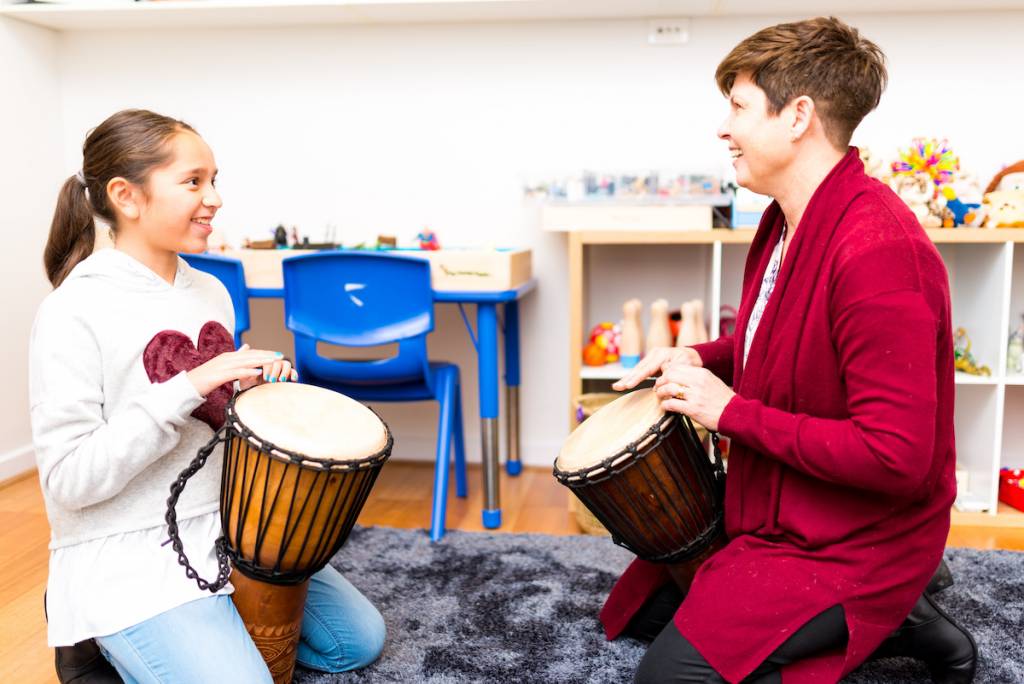
Mirroring & Empathy: Helping Your Child Learn to Calm Their Big Feelings.
All parents have had experiences such as their child yelling, or the meltdown in the middle of the supermarket. It can feel overwhelming.
But here’s the good news: big feelings are normal, and your child doesn’t need you to make the feelings disappear. What they need most is you — your calm presence, your steady voice, your understanding.
Sometimes, what they need is for you to show them the way back by acting as a mirror.
What Is Mirroring?
Mirroring is when you gently reflect back what your child is feeling, whether it is verbal or non-verbal responses. You can help your child build awareness of feelings by using your voice, your body language and your actions to reflect back or mirror what your child is feeling.
You might say: “oh looks like you are feeling sad”, while taking a breath, letting out a sigh and dropping your shoulders.
Mirroring for your child can also help them build skills because it can also refer to your ability to offer words, body language and behaviours for them to imitate as well. When seeing sadness, you might move to a comfortable sitting spot, and/or pick up a soft toy to cuddle.
The Brain Science: Mirror Neurons & Emotional Learning.
Children learn emotional skills by watching you — and their brain is wired for it.
Inside all of us are special brain cells called mirror neurons. These neurons “light up” when we see someone else do something — or feel something.
For example:
- If you pick up a cup, specific neurons fire.
- If you watch someone else pick up a cup, many of the same neurons also fire.
Mirror neurons are one way our brain assists us to learn practical tasks as well as social emotional skills.
This means that if you take a slow breath, soften your face, or relax your shoulders, your child’s mirror neurons fire as if they were doing the same thing. Their brain practices the calm behaviour you’re showing.
It’s your child’s nervous system internal response by saying: “Oh… this is what I should do when I’m feeling like this. I can follow that.”
How awesome is that!