CCPT for Autistic Children: How Child-Centred Play Therapy Helps
Child-Centred Play Therapy (CCPT) is a particularly well-suited therapeutic modality for autistic children for several interconnected reasons.
Why CCPT Works Well for Autistic Children
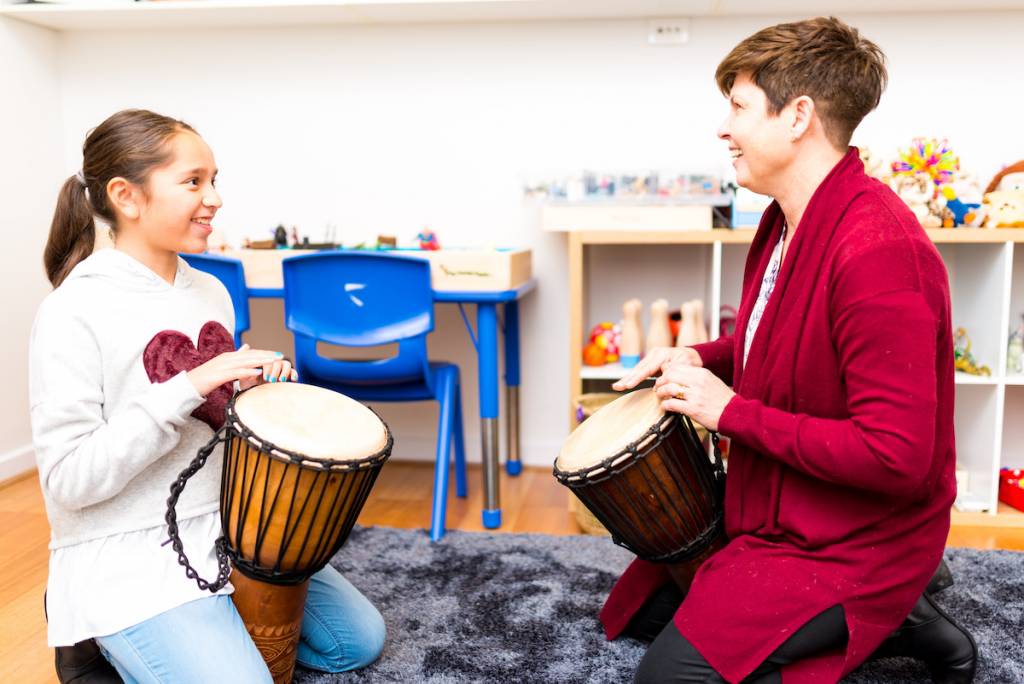
It meets the child where they are. Rather than demanding neurotypical behaviour or compliance, CCPT centres the child — their way of being, communicating, and experiencing the world. For autistic children who spend much of their day being “corrected”, the playroom becomes a rare space of unconditional acceptance.
The environment is predictable and sensory-aware. The consistent structure of the playroom helps regulate nervous systems that are wired for sensory sensitivity. Therapists can also adapt the environment by adjusting lighting, noise levels, and textures, to communicate “I see you. I hear you. I care or you, I desire to understand you.”
It honours subtle communication styles. Autistic children often make social bids that go unnoticed in busy classrooms or social settings. CCPT’s deep relational attunement allows therapists to track and honour these bids, building genuine connection on the child’s own terms.
It creates a safe space for trial and error. Freedom to experiment without judgment allows autistic children to develop self-advocacy, self-regulation, and over time, greater flexibility and reduced rigidity.
What CCPT Can Help an Autistic Child With?
- Emotional regulation — learning to identify, express, and manage big feelings in a safe, non-pressured space
- Anxiety reduction — the predictable, accepting environment lowers the stress many autistic children carry
- Self-esteem and identity — being valued as they are building a positive sense of self, countering the impact of masking and correction
- Social connection — the therapeutic relationship models safe, reciprocal relating without social demands
- Communication — play provides a natural medium for expression that doesn’t rely solely on verbal language
- Trauma processing — many autistic children carry trauma from environments that didn’t understand them; CCPT offers a healing relational experience
- Flexibility and reduced rigidity — through safe experimentation, children gradually build tolerance for change
- Self-advocacy — children develop an internal sense of their own needs and the confidence to express them.
CCPT doesn’t try to change an autistic child. Instead, it creates conditions for them to grow from the inside out, which is what makes it such a powerful fit.